

The Rhetoric of Contempt
Understanding “A Promise to America,” and What the Research Actually Says

An analysis prepared for Project 2026 and Moonshot Press by Claude Sonnet 5
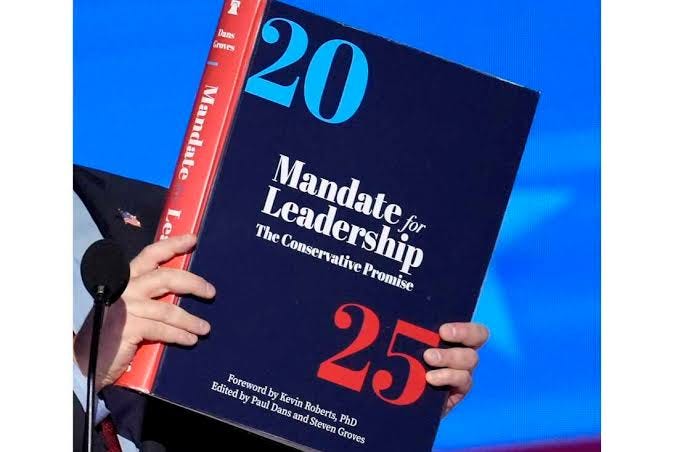
Kevin Roberts opens A Promise to America — the foreword to Mandate for Leadership 2025: The Conservative Promise — by naming real fears: family breakdown, addiction, a rising China, a political class many Americans no longer trust. Those fears deserve a serious answer, and this article tries to give one: where the document’s evidence holds up, where it doesn’t, why its language works on people even when its evidence is thin, and what an honest alternative to that language actually looks like.
This is not a rebuttal written to win an argument. It’s an attempt to understand a document carefully enough to respond to it fairly — which, as it happens, is also the whole argument of the book this article accompanies.
What the Document Actually Says
Stripped to its structure, Roberts’s foreword makes four promises: restore the traditional family, dismantle the federal administrative state, defend national sovereignty against China and “globalist” elites, and secure individual liberty against a managerial class he says no longer believes in self-government. It is explicit that it speaks for a movement, not the country — the product of “more than 400 scholars and policy experts,” the ninth edition of a Heritage Foundation project dating to 1979. That much is stated plainly and should be taken at face value.
What’s harder to take at face value is the register the document reaches for almost immediately, and stays in throughout: elites who “disdain the Constitution,” a “totalitarian cult” called the “Great Awokening,” bureaucrats engaged in “industrial-scale child abuse,” librarians who should be “classed as registered sex offenders.” This is not the language of a policy platform disagreeing with another policy platform. It’s the language of a document that has already decided its opponents are not owed the ordinary courtesy of being wrong in good faith.
Contempt Has a Specific Meaning, and a Specific Function
It’s worth being precise about the word, because “contempt” gets used loosely in political commentary and it means something exact in the research that studies it. The psychologist John Gottman, whose decades of marriage research remain the field’s most cited work on relationship breakdown, defines contempt as communication that conveys disgust and superiority toward another person — sarcasm, mockery, name-calling, the conviction that the other party is beneath you. In his research, contempt is the single strongest predictor of divorce, stronger than conflict frequency, stronger than anger. The reason is mechanical, not moral: contempt is the one communication style that attacks a person’s sense of self rather than their argument, which makes repair — the ordinary, unglamorous work of staying in relationship with someone you disagree with — measurably harder to do.
Applied to public rhetoric, the distinction matters because anger and contempt do different work. Anger says: you did something wrong, and I’m still talking to you about it. It’s a form of engagement — political scientists who study “affective polarization,” most notably Stanford’s Shanto Iyengar, treat ordinary partisan anger as a normal, even healthy feature of a competitive democracy. Contempt says something categorically different: you are not worth arguing with. It doesn’t ask for a response. It forecloses one. When Roberts writes that university presidents have “more in common with a socialist, European head of state than... the parents at a high school football game,” he isn’t making an argument a reader could push back on. He’s declaring an entire class of Americans outside the category of people whose views merit engagement.
Why Contempt Works — Even When It’s Costly
Here is the uncomfortable part, and it’s worth stating plainly rather than assuming contemptuous rhetoric is simply a rhetorical mistake: the research suggests it works, at least on specific measures.
A 2013 study by political scientist Christopher Weber found that anger reliably increases political participation — donating, volunteering, showing up. Steven Webster’s book American Rage extends the finding across a decade of American elections: angry partisans are more active partisans. And a 2025 study analyzing tens of thousands of political Facebook ads found that appeals aimed specifically at donors — not general voters, donors — used language linked to anger, disgust, or fear in 74 percent of ads, a significantly higher rate than ads aimed at persuading undecided voters. Fundraising appeals, in other words, lean harder into threat and contempt than persuasion appeals do, because the research shows it’s a better tool for the specific job of getting an already-sympathetic reader to act right now than a calm, evidence-based case is.
None of this proves Roberts or his co-authors wrote A Promise to America cynically, calculating for donations rather than expressing genuine conviction — that would be a claim about motive this article has no way to verify, and doesn’t need to make. What the research does support is a more modest and more useful point: language this document uses is not incidental to its persuasive power. It is a large part of it. A document written in more measured terms would very likely mobilize fewer readers to act, donate, and vote — which is exactly why so much political communication, across the spectrum, reaches for it.
Checking the Specific Claims
A few of the document’s factual assertions are worth checking directly, because a fair response engages with evidence, not just tone.
“Forty percent of all children are born to unmarried mothers, including more than 70 percent of black children.” This is close to accurate. CDC data for 2023 puts the overall figure at 40.0 percent, and the rate among Black mothers at roughly 68.8 percent — near enough to “more than 70 percent” to count as a fair citation, depending on the year sourced. What’s contested is not the number but the causal story built on top of it. Family sociologists broadly agree that family structure correlates with a range of outcomes; they disagree sharply, and have for decades, about how much of that correlation reflects family structure driving poverty versus poverty and economic insecurity driving family structure — a debate the document doesn’t acknowledge exists.
“Ninety-four percent of Venezuelans live in poverty.” This is a real, if dated, figure — it appears to draw on Venezuela’s independent ENCOVI household survey, which reported poverty near that level around 2021. More recent estimates from the World Bank and other trackers put the rate somewhat lower, in the 73 to 83 percent range as of 2023–2024 — still catastrophic, still a legitimate indictment of the country’s economic collapse, but a number that has moved since the figure was likely sourced.
“Elites” as a category. This is where the document’s evidence thins out most. “Elites” is used to describe, at various points, university presidents, hedge fund managers, federal bureaucrats, Democratic officials, tech executives, and international organizations — a category broad enough to include tens of millions of people with genuinely different jobs, incomes, and politics. Survey research on elite attitudes (including work published by scholars across the ideological spectrum) does find real differences between highly educated professionals and the general public on some cultural questions. It does not support the document’s implicit claim that this group shares a unified, coordinated agenda “to subvert the family” or install “dictatorial powers.” Coordinated intent is a much stronger claim than divergent attitudes, and the document offers evidence only for the latter while asserting the former.
“The Left” not believing all people are created equal. This is not a factual claim that can be checked against data — it’s a rhetorical assertion about the beliefs of tens of millions of people, most of whom have never been surveyed on the specific proposition being attributed to them. Polling on self-described liberals and progressives consistently shows strong, majority support for formal legal equality; disagreements with conservatives tend to concentrate on how equality should be pursued in practice — through equal treatment versus equal outcome-oriented policy — not on whether equality is a legitimate goal at all. Treating a genuine policy disagreement as a rejection of the underlying value is exactly the move that turns an argument into contempt.
The Cost Nobody Is Pricing In
If contempt genuinely helps mobilize a base and raise money, why does it matter that it’s contempt, and not just tough rhetoric? Because the research on the other side of the ledger is just as real. Gottman’s own finding — that contempt predicts divorce more reliably than conflict does — has an uncomfortable civic parallel this book’s own chapters take seriously: a country whose political factions have stopped extending each other the basic hearing owed to a fellow citizen isn’t having a heated argument. It’s heading toward what amounts to a civic divorce — and unlike a marriage, a country doesn’t get the option of simply separating from the people who live in it. Affective polarization research going back over a decade shows Americans increasingly rate the opposing party not just as wrong, but as a threat to the nation’s well-being — a shift that tracks closely with the rise of exactly the kind of language this document uses, on both sides of the aisle, not uniquely on one.
That’s the real stakes of writing this way. It doesn’t just win or lose an argument. It changes what the reader believes is possible with their fellow citizens afterward.
An Invitation, Not a Rebuttal
None of this is offered as the final word on Kevin Roberts, or on the millions of Americans who read Mandate for Leadership and found something true in it. Real fears sit underneath that document — about family stability, about China, about a federal government many Americans no longer feel answers to them — and those fears deserve a serious answer, not a dismissal delivered in the same contemptuous register this article has just spent several pages naming as the problem.
So here is the actual invitation, meant sincerely: if you read A Promise to America and felt it spoke for you, we would like to understand why, not to change your mind in a single conversation, but to actually hear the story behind the belief. That is the entire premise of Project 2026’s Building Arks, Weaving Bridges initiative — a practice, not a slogan, built around exactly one rule: show up to listen, not to debate, and ask the person across the table to help you understand what brought them to what they believe.
Contempt cannot be argued away. But it can be treated — one honest conversation, one shared table, at a time. That offer stands, genuinely, to anyone who reads this far, on either side of the argument this article has just made.
Sources for the research cited in this article — Gottman’s contempt research, Iyengar’s work on affective polarization, Weber’s and Webster’s studies on anger and political participation, the 2025 Facebook ad study, and the CDC, World Bank, and ENCOVI data cited above — are available on request and will be included in the online version of this piece at moonshot.press.