
Declaration to Constitution — Article Two
Shimon Waldfogel, MD With ADA 5.6 Sol
The Declaration announced the purposes of legitimate government, but it did not create institutions capable of fulfilling them. This installment examines why the promise of equality, rights, and consent required a constitutional architecture—and why a gap between promise and practice has remained from the beginning.
Two Summers in the Same Room
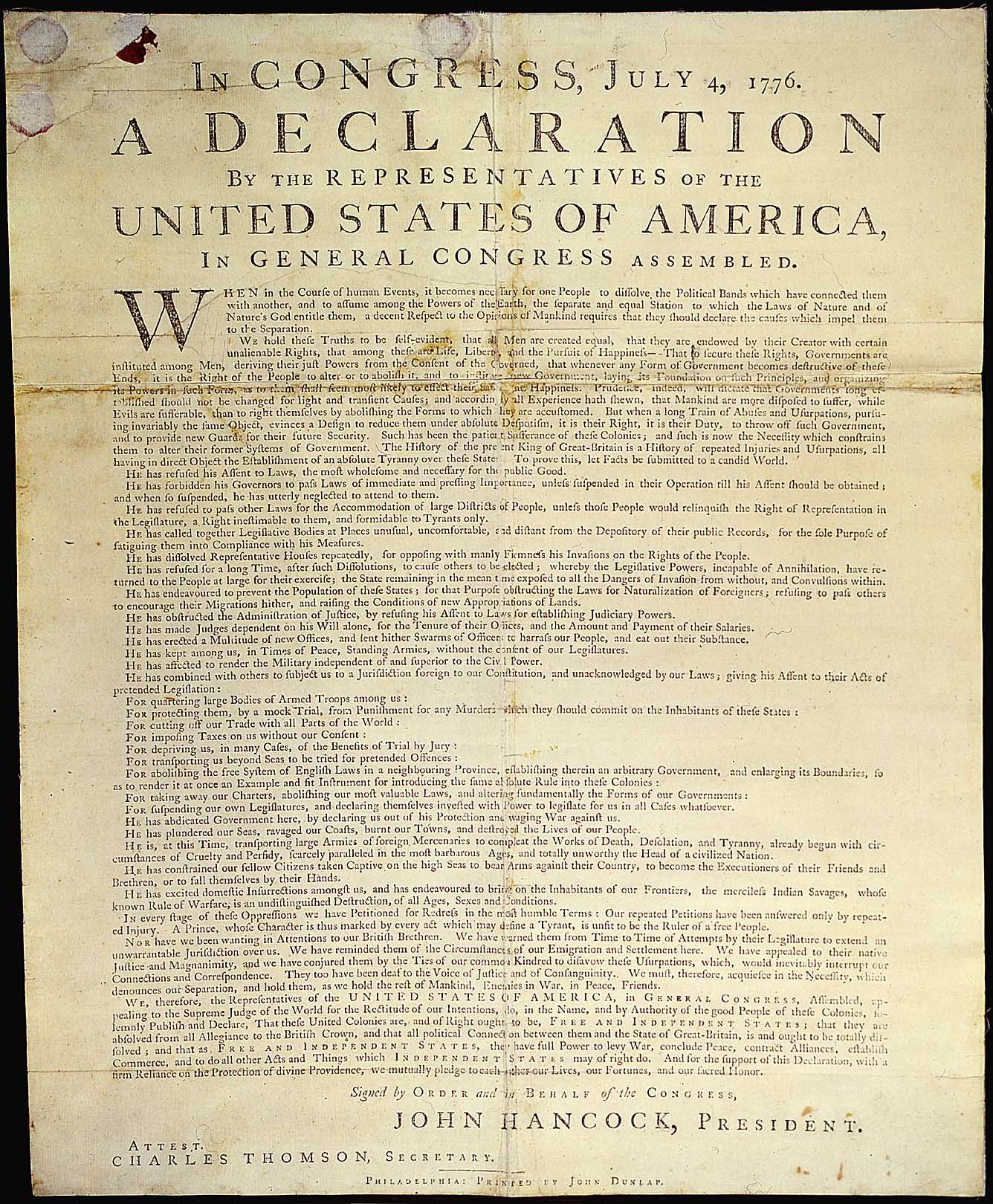
In July 1776, delegates gathered in the Pennsylvania State House to approve a declaration.
They announced that human beings possess rights government does not create, that political authority derives from the consent of the governed, and that a people may alter a government that becomes destructive of those purposes.
Eleven summers later, delegates returned to the same building for a very different task.
They closed the windows, met in secrecy, and tried to construct a government.
The contrast captures the central problem of the American founding.
A declaration can name a moral destination. It cannot collect revenue, enforce a treaty, settle a dispute between states, protect a minority, administer a law, or restrain an ambitious official. Principles can tell us what government is for. They do not automatically tell us how power should be organized.
The Declaration supplied the promise.
The constitutional generation confronted the problem of practice.
The Declaration’s Moral Claim
The Declaration of Independence was written to justify separation from Britain. It listed grievances, appealed to the wider world, and announced the existence of a new political community.
Yet its lasting power comes from the moral argument at its center.
Human beings possess equal moral worth. They hold rights that precede government. Governments are created to secure those rights. Legitimate power depends on consent. When government becomes destructive of its proper ends, the people retain the authority to alter it.
This argument reversed the customary direction of political legitimacy.
Government did not confer dignity on the people. The people authorized government.
A ruler was not legitimate simply because he possessed power, inherited a throne, or commanded obedience. Political authority had to be connected to public purposes: protecting life and liberty and enabling people to pursue safety and happiness.
The Declaration therefore became more than a justification for one revolution. It became a standard against which Americans could judge their own country.
That standard exposed a contradiction from the beginning. The men who declared that all were created equal lived in a society built partly on enslavement, dispossession, and exclusion. Women possessed no equal political standing. Enslaved people were treated as property. Indigenous nations were pushed outside the imagined political community.
The promise was universal in language and radically restricted in practice.
That gap has been a source of hypocrisy. It has also been a source of renewal. Abolitionists, women’s-rights advocates, civil-rights leaders, workers, immigrants, people with disabilities, and many others have used the Declaration’s words to demand inclusion within principles originally denied to them.
The Declaration gave the nation a moral compass.
It did not give the nation a working government.
Independence Exposed the Problem
The Revolution created a common cause: defeat British rule and secure independence.
But a shared enemy is not the same as a durable union.
The first national framework, the Articles of Confederation, reflected the revolutionaries’ understandable suspicion of centralized power. The states had just fought a distant government they believed had abused its authority. They were reluctant to create another.
The Articles therefore described the union as a “league of friendship” among states that retained extensive sovereignty.
Congress could declare war, conduct diplomacy, and request money. But it could not reliably compel the states to provide funds. It could make treaties but could not ensure state compliance. It could not regulate interstate or foreign commerce. It carried national responsibilities without dependable national power.
The weakness ran deeper than a missing tax or commercial authority.
The Confederation government acted largely through the states rather than directly through the people. The nation had obligations, debts, and foreign commitments, but its central government often had to ask thirteen separate governments whether they wished to cooperate.
The problem was not merely that leaders lacked virtue.
The system lacked capacity.
By the mid-1780s, the consequences were increasingly difficult to ignore. States imposed barriers on one another’s trade. Creditors and debtors fought over unstable economic policies. Foreign governments doubted whether American treaties would be honored. Congress struggled to pay national debts and military obligations. Shays’ Rebellion intensified fears that the union could neither respond to economic distress nor maintain public order.
The promise of self-government had encountered its first major test.
Could a nation remain free if its government was too weak to perform the responsibilities entrusted to it?
The Confederation period revealed a principle that reaches far beyond the founding era:
A public promise is only as real as the institutions capable of carrying it into practice.
A right may be formally recognized yet remain impossible to enforce.
A public benefit may exist in law yet remain inaccessible to the people eligible for it.
A community may promise equal opportunity while its schools, neighborhoods, healthcare systems, and transportation networks produce radically unequal chances to flourish.
In each case, the principle exists.
The practice does not.
This is the promise-to-practice gap.
The Declaration had announced equality, rights, and popular sovereignty. But those commitments required more than belief. Rights required protection. Consent required representative procedures. Public responsibilities required revenue, administration, law, and accountability. Liberty required limits on power. Justice required governmental capacity as well as governmental restraint.
Too little power can leave rights undefended and public obligations unmet.
Too much unchecked power can turn the government created to secure rights into their greatest threat.
The constitutional problem was therefore not simply how to create a stronger government.
It was how to create authority strong enough to serve the public, yet restrained enough to remain its servant.
From a League of States to “We the People”
The delegates who assembled in 1787 had been authorized to consider revisions to the Articles. They ultimately proposed a new framework.
Its opening words announced the shift: “We the People.”
The Articles had organized a compact among states. The Constitution claimed authority from the people of the United States and created a government capable of acting through law upon individuals.
It established legislative, executive, and judicial institutions. It granted national powers while dividing and limiting their exercise. It created processes for elections, lawmaking, adjudication, amendment, and ratification.
The detailed architecture will be examined later in this series. What matters here is the change in constitutional purpose.
The new government would possess greater capacity—but not unlimited power.
It would be able to raise revenue, regulate commerce, enforce national law, and conduct foreign relations. At the same time, power would be distributed among institutions and levels of government so that no single actor could easily control the whole.
The Constitution did not logically follow from every phrase of the Declaration. The Declaration did not require two senators per state, an Electoral College, or the precise balance among Congress, the president, and the courts. Those arrangements emerged from political judgment, competing interests, regional bargaining, and compromise. Other constitutional choices were possible.
What the Declaration required—if its principles were to become more than revolutionary rhetoric—was some durable system through which a people could authorize, exercise, limit, and correct public power.
The Constitution was one answer to that requirement.
It was an extraordinary answer.
It was also a morally compromised one.
An Architecture Born Fractured
The Constitution created a more capable national government while accommodating and protecting slavery.
The Three-Fifths Clause increased the representational power of slaveholding states by counting enslaved people for representation while denying them political membership. Congress was prevented from prohibiting the international slave trade before 1808. The fugitive slave provision required the return of people who escaped bondage.
These were not minor inconsistencies.
They embedded human domination within the architecture of a republic that claimed authority from the people.
The contradiction reveals an essential lesson:
Institutions can preserve a political community while violating the principles that justify it.
A government may be efficient and unjust.
An institution may operate legally while betraying its public purpose.
A constitution may limit some forms of power while protecting others.
The Constitution did contain mechanisms for repair, including amendment. The Bill of Rights was added after ratification. The Reconstruction Amendments abolished slavery, established national citizenship, and prohibited racial discrimination in voting. Later amendments expanded political participation further.
But constitutional repair has never been automatic. Text has required interpretation. Formal rights have required enforcement. Excluded people have had to organize, speak, litigate, protest, vote, and force the country to confront the distance between its promises and its practices.
The American constitutional tradition is therefore neither a finished achievement nor an empty fraud.
It is an ongoing struggle to build institutions capable of serving principles they have repeatedly failed to honor.
The Question Every Generation Inherits
The Declaration and the Constitution answer different questions.
The Declaration asks: What is government for? Where does legitimate authority originate? What rights must political power respect?
The Constitution asks: Who may exercise public power? Through which institutions? Under what procedures and limits? How can the system be corrected?
A third question belongs to every generation of citizens:
Is the architecture serving the promise?
That question cannot be answered by admiring either document from a distance.
It requires examining what institutions actually produce.
Are rights usable or merely formal?
Does representation connect citizens to public decisions, or insulate decision-makers from them?
Does governmental capacity protect the public, or become a source of private advantage and coercion?
Do constitutional processes encourage deliberation and accountability, or have they become too captured, fragmented, or opaque to perform their purposes?
The Declaration told America what legitimate government was for.
The constitutional generation confronted how power might be organized to pursue those purposes among imperfect human beings.
Our task is to examine whether that architecture is still performing as intended under conditions its designers could not have imagined.
That is where the series goes next.
Next in Declaration to Constitution:
Diagnosing the Modern Body Politic: How the Madisonian Balance Was Disrupted