


Ask Americans about healthcare and, from across the political spectrum, you’ll hear the same word: broken. We spend more than any nation on earth and still watch families go bankrupt over a hospital stay. We produce world-class science and shutter rural clinics in the same week. One of the architects of the Affordable Care Act recently admitted that dissatisfaction is at an all-time high — that people hate the system more now than before the law passed.
And yet we keep having the same argument. Is healthcare a right or a service? Single payer or free market? We’ve staged that debate for decades, and it has gone nowhere. The shouting gets louder; the system gets sicker.
Moonshot Press in collaboration with the Institute for Salutogenesis The Healthcare Initiative — begins from a different premise. The problem isn’t that we lack ideas. It’s that we lack a way to reason through them together. So we borrowed a method from the one field that confronts overwhelming complexity every single day and still manages to act: medicine.
A good doctor doesn’t lead with the cure. When a patient arrives in distress, the doctor takes a history, examines, runs the tests, and names the problem — before reaching for the prescription. Diagnosis comes first. Treatment follows. And then, crucially, the patient is monitored and the plan adjusted over time.
What if we treated the healthcare system the same way? Not as a battle to be won by one side, but as a patient to be understood. That is the idea behind Civic Grand Rounds.
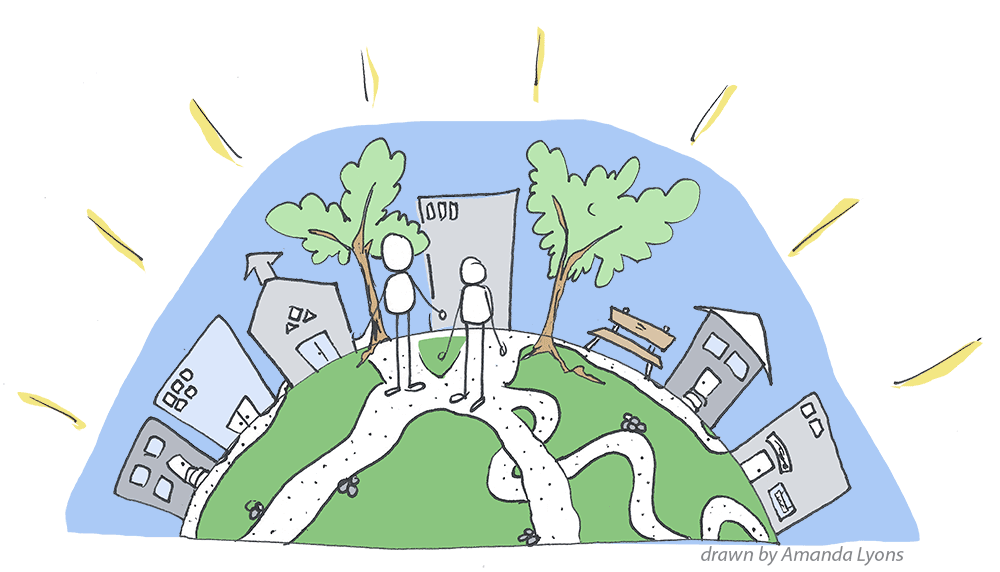
In medicine, grand rounds is a disciplined public forum where a difficult case is presented, the evidence examined, competing explanations debated, and a plan proposed and followed up. Civic Grand Rounds brings that discipline into public life. The premise is simple and a little radical: the patient is the system — not a party, not a CEO, not “the other side” — and the public is part of the clinical team. Your experience as a patient, a parent, a caregiver, or a clinician isn’t an anecdote to be managed. It’s evidence.
Each session unfolds like a case. We present the problem and trace, briefly and without blame, how we got here. We examine the data calmly — what’s actually true, and what we don’t yet know. Citizens testify from lived experience: the denied claim, the delayed referral, the postpartum care that never came. Experts clarify. Insurers, hospitals, and agencies answer for their part of the story. Then we build a problem list, a treatment plan, and — most important — a scorecard that tracks whether anything actually improves before the next round.
Sessions are held in public and livestreamed on Zoom, Facebook, and YouTube, so that a neighbor in the room and a parent watching from a kitchen table can take part on equal footing. Artificial intelligence helps us organize hundreds of testimonies and summarize the evidence — but under one unbreakable rule: AI recommends; humans decide. Always. No person is reduced to a data point. No community is synthesized into invisibility.
Two commitments anchor everything. The first is a floor: can everyone get the care they need across a job loss, a move, a disability, the years of aging? The second is an aim: does the system actually create health — through prevention, mental health, and the first years of life — rather than only billing fastest after harm is done? Universal coverage is the floor. A salutogenic system, one that produces flourishing, is the aim. We hold both.
This is not a town hall built for performance, or a debate built for winners. It is a public diagnostic process with a record and a plan. Behind it stands a wager as old as the republic itself: that ordinary citizens, given real information and real tools, can be trusted to reason through hard problems — and that an engaged, informed, respectful public is not a luxury in a crisis like this one. It is the treatment.
The case is open. The treatment plan is unfinished. And the question it turns on belongs to all of us: How do we build a system where everyone can get the care they need to live healthy, flourishing lives?
The Case Presentation is Being Developed. The rounds are open soon.