


Welcome. This is a space built by one citizen, for every citizen who suspects that democracy asks more of us right now than we have been giving it — and who wants to do something about that.
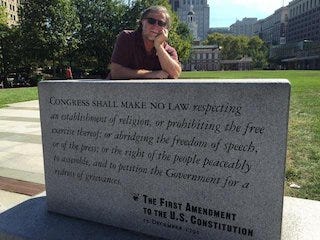
My name is Shimon Waldfogel. I am a physician — a psychiatrist by training, with most of my professional life spent in the company of older adults near the end of their working years. I am not a technologist. I am not a policy scholar. I am not an institution. I am one citizen who has decided that the moment we are living through asks more of people in my stage of life than it is asking of us, and that the cost of waiting for somebody else to do this work is too high.
David Brooks writes about two mountains. The first mountain is the one we are told to climb — the career, the credential, the household, the reputation, the long ascent of building a life. The second mountain is the one we discover, often after a quiet valley, when the question changes from what do I want to make of myself to what am I here to give. David Rubenstein, in his late fifties, said something I have not stopped thinking about: “I’m running out of time. Before I die, I’d like to have been truly transformative in at least one area.” That is the second mountain stated plainly. It is also where I find myself.
I have spent decades sitting with people in the aftermath of loss — loss of capacity, loss of role, loss of the work that defined them. What I learned from that practice is not a clinical insight. It is a human one. People do not break under hardship the way the textbooks predict. They break when their world stops making sense, when they no longer feel that they have the resources to meet what is in front of them, and when the thread connecting their effort to something larger goes slack. Dr. Aaron Antonovsky called those three things comprehensibility, manageability, and meaningfulness. Viktor Frankl, writing from being a prisoner in the Auschwitz death camp, a place none of us should have to write from, said it more simply: a person who has a why to live can bear almost any how. I have watched both of those propositions hold true at hospital bedsides and in the clinic for thirty years. They are the most reliable things I know about human beings.
The question that organizes this stage of my life is the one Frankl insisted life is always asking us. Not what do I want from the world, but what does the world ask of me now?
My answer is what I am building. Moonshot Press is the publishing arm — the place where ideas about technology, democracy, work, and human flourishing are written out in language ordinary citizens can use. The Institute for Salutogenesis is the framework — the patient effort to bring Antonovsky’s science of health, not the science of disease, into how we talk about families, communities, workplaces, and public policy. The People’s Commission on Technology and the American Future is the civic body — the room where workers, parents, educators, and local leaders can deliberate seriously about what artificial intelligence is doing to American life, and turn that deliberation into accountability. Project 2026 is the calendar — the recognition that the country’s 250th anniversary is not a parade but a reckoning, and that citizens have a year to make it count.
These are not four projects. They are one project with four faces. Each is asking a version of the same question: how do we protect the conditions for human thriving in a moment when the most powerful technology in history is reshaping work, attention, community, and the meaning of citizenship faster than our institutions can answer?
I should say plainly that this work is possible at this scale only because of artificial intelligence. The same technology I am asking the country to govern more wisely is the technology that lets one physician in Montgomery County, Pennsylvania, draft policy briefs, run civic frameworks, produce video and publishing material, and convene a national conversation that would have required a building full of staff a generation ago. That is not a contradiction. It is the point. AI is neither savior nor threat in the abstract. It is a tool whose consequences depend on the hands that hold it and the purposes those hands are serving. I am trying, in public and with disclosure, to show what it looks like to use these tools in service of human flourishing rather than in flight from it.
I am under no illusion about what one person can finish. The honest version is that I am trying to start something that other people — younger, smarter, closer to the communities most affected — can carry further than I can. That is what the second mountain actually asks of us. Not heroism. Stewardship. The patient handing-on of the conditions under which the next generation can govern itself.
If any of this resonates with where you are in your own life — whatever mountain you are on — I would be grateful for your company in the work.
A Tribute to Inspiration
IN MEMORIAM
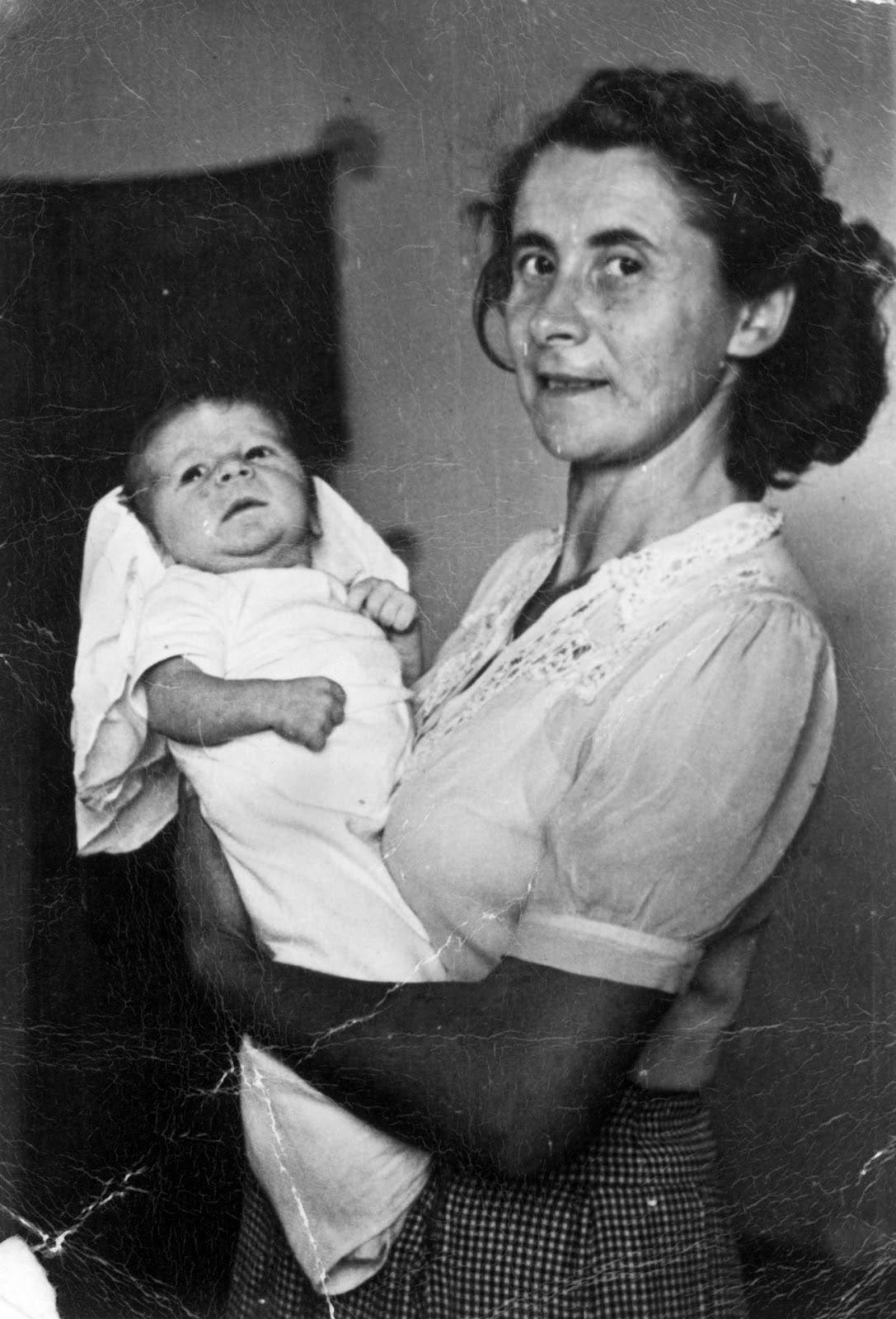
Perla Rochman Waldfogel
1920–1970
――――――
Moonshot Press is dedicated to her memory.
My mother survived what the twentieth century was capable of at its worst —
totalitarian prisons, labor camps, the systematic erasure
of people who dared to believe in justice.
She survived. She did not become bitter.
That is the thing I have never stopped thinking about.
She taught me, by the way she lived, that the work of one person matters —
that justice is not a destination but a practice,
and that compassion is not a sentiment but a discipline.
The democracy she never took for granted,
I was handed without earning.
Moonshot Press is part of what I owe.
――――――
“The care of human life and happiness, and not their destruction,
is the first and only legitimate object of good government.”
— Thomas Jefferson
She knew this to be true before she knew his name.