

Reflections on Constitution Day
James Madison, Factions, and the Role of Public Opinion

As we celebrate Constitution Day on September 17, commemorating the signing of one of the most important documents in the history of democracy, it is worth reflecting on the intellectual framework that shaped its formation. James Madison, often called the "Father of the Constitution," played a pivotal role in drafting the document that has underpinned American democracy for over two centuries. Central to Madison’s vision was his deep concern about factions, the importance of checks and balances, and the potential of public opinion as an underutilized check on government power.
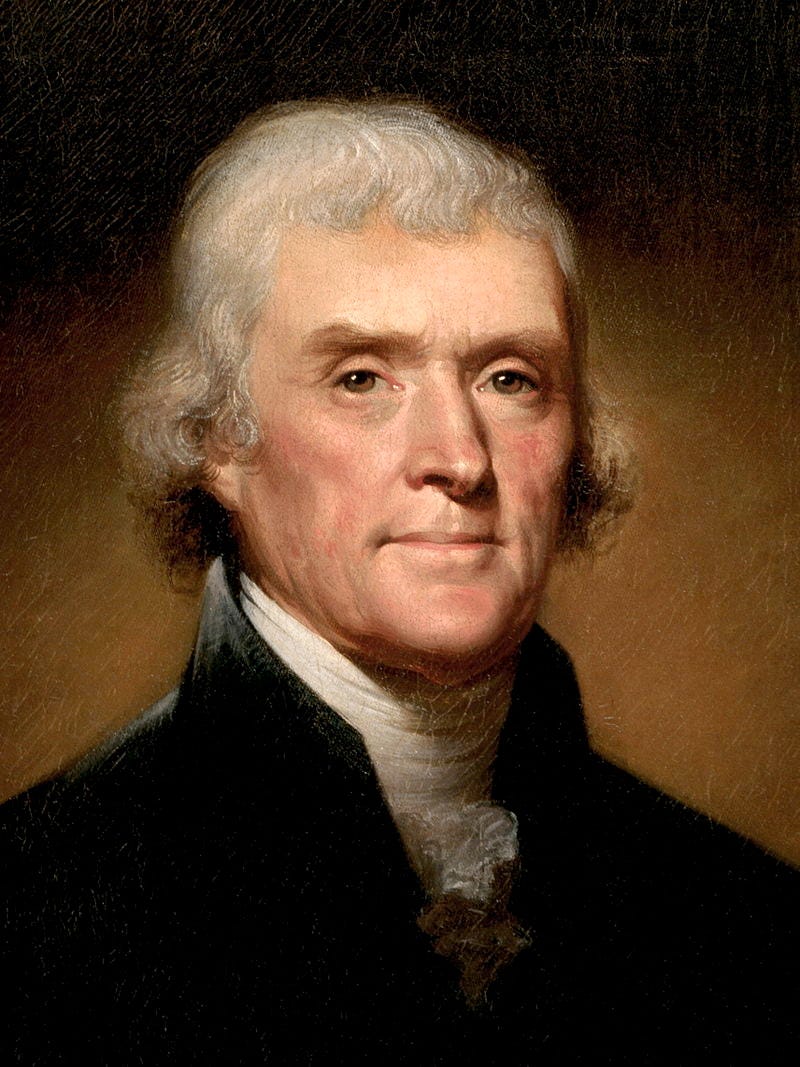
Madison and the Threat of Factions
In Federalist Paper No. 10, Madison famously warned about the dangers posed by factions, which he described as groups of citizens driven by impulses or interests contrary to the rights of others or the collective interests of the community. He saw factions as an inevitable product of human nature—people naturally form groups based on shared interests, be they economic, ideological, or political. Madison wrote, “By a faction, I understand a number of citizens... who are united and actuated by some common impulse of passion, or of interest, adversed to the rights of other citizens, or to the permanent and aggregate interests of the community."
Madison’s analogy between factions and diseases reflected his belief that factions could undermine the health of the republic, much like unchecked diseases can destroy the human body. His solution, however, was not to eliminate factions, which he understood was impossible without infringing on individual liberties. Instead, Madison proposed creating a system where the harmful effects of factions could be controlled. This solution led to the Constitution’s structure of checks and balances, federalism, and separation of powers.
The Constitution as a System of Checks and Balances
Madison argued that the Constitution’s structure would prevent any one faction from gaining dominance and imposing its will on the rest of the populace. By dividing power between the legislative, executive, and judicial branches, and further between federal and state governments, the Constitution would create a system in which competing factions could limit each other’s influence. This would prevent what Madison referred to as "tyranny of the majority" or, conversely, the tyranny of a minority faction over the majority.
The checks and balances, both between branches of government and between levels of government, were meant to mitigate the risk that any one faction could dominate. By dispersing power, Madison believed the republic could remain resilient to the destructive effects of factions. In Federalist Paper No. 51, he succinctly stated, “Ambition must be made to counteract ambition.”
Public Opinion: The Undervalued Check on Government Power
While Madison’s focus on institutional checks and balances is well-known, another potential check on government that he recognized, though not fully developed, was public opinion. In a democracy, the will of the people holds significant power. Madison believed that an informed and engaged citizenry, guided by reason and deliberation, could provide a natural check on government overreach and the influence of powerful factions.
However, public opinion is a double-edged sword. While it can serve as a corrective force, it can also be manipulated by powerful interests, including factions themselves. Madison did not foresee the extent to which mass media could amplify the influence of factions, and his era did not grapple with the challenge of media monopolies or the rapid dissemination of information (and misinformation) that we face today.
Madison likely imagined public opinion as being shaped by a reasoned public discourse—citizens engaged in thoughtful deliberation over the issues of the day. In practice, however, modern media, while indispensable, has often hindered rather than enhanced this deliberative process. Media can be a powerful check, but its limitations must be recognized. When driven by factional interests or sensationalism, media can distort public opinion, sometimes leading to polarization rather than the reasoned debate Madison envisioned.
Reimagining Public Opinion as a Check in Modern Democracy
The challenge today is how to revitalize public opinion as a check on government in the face of these modern realities. This requires:
Media Reform: Strengthening the integrity of media institutions by promoting diverse viewpoints, independent journalism, and mechanisms to counter disinformation can restore media's role as a forum for balanced public discourse.
Civic Education: A well-informed citizenry is crucial. Investing in civic education can help citizens understand the complexities of government, the role of checks and balances, and how to engage thoughtfully in public discourse.
Digital Platforms: The rise of digital platforms provides new opportunities for public engagement but also presents challenges in terms of echo chambers and misinformation. Developing ways to foster thoughtful deliberation in these spaces can help restore the power of public opinion as a check on government.
Encouraging Active Citizenship: Madison’s model requires active citizen engagement. Public opinion as a check can only be effective if citizens participate in the democratic process by voting, staying informed, and holding public officials accountable.
Conclusion
As we mark Constitution Day, it is important to reflect on the relevance of Madison’s insights today. His concerns about factions, his defense of checks and balances, and his belief in the power of public opinion remain central to preserving American democracy. Yet, the evolving role of the media and the complexities of modern public discourse require us to reconsider how public opinion can be more effectively utilized as a check on government. While Madison laid the foundations, it is up to us to ensure that public opinion is an active, thoughtful, and democratic force in the 21st century.
This article serves as the first part of a series, with the next exploring Benjamin Franklin’s famous remark, “A republic, if you can keep it,” and how it challenges us to safeguard the values embedded in the Constitution.