

Hey there. I’m Liam.
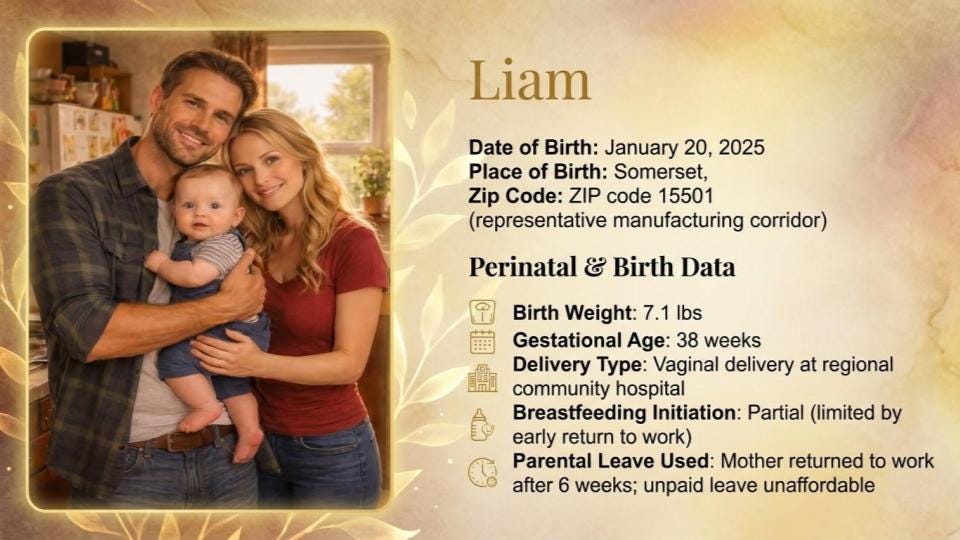
Hey there. I’m Liam.
I was born on a cold January morning in 2026, right here in Somerset, Pennsylvania—ZIP code 15501. My mom says the hospital where I came into the world is one of the last things still standing strong in this town. Everything else? Well, it’s been leaving for a while now.
This is my home. These hills used to echo with the sound of work—coal mines running deep, factories humming with second and third shifts, men and women coming home tired but with paychecks that meant something. My grandpa worked the mines. My other grandpa worked at the plant that made parts for cars people actually bought. They raised families here. Built lives.
But that was then.
The Town I Was Born Into
Somerset sits in the heart of Pennsylvania’s Rust Belt, tucked into the Appalachian ridges where the landscape is beautiful and unforgiving in equal measure. Population around 6,000 and shrinking. Median household income hovering around $35,000—well below the national average.
Main Street tells the story better than any statistics could. The hardware store closed three years ago. The pharmacy followed. There’s a Dollar General now, and a gas station that sells lottery tickets and hope in equal measure. The old factory—the one that employed 400 people—sits empty, windows broken, chain-link fence rusting. People drive past it every day. Nobody talks about it anymore.
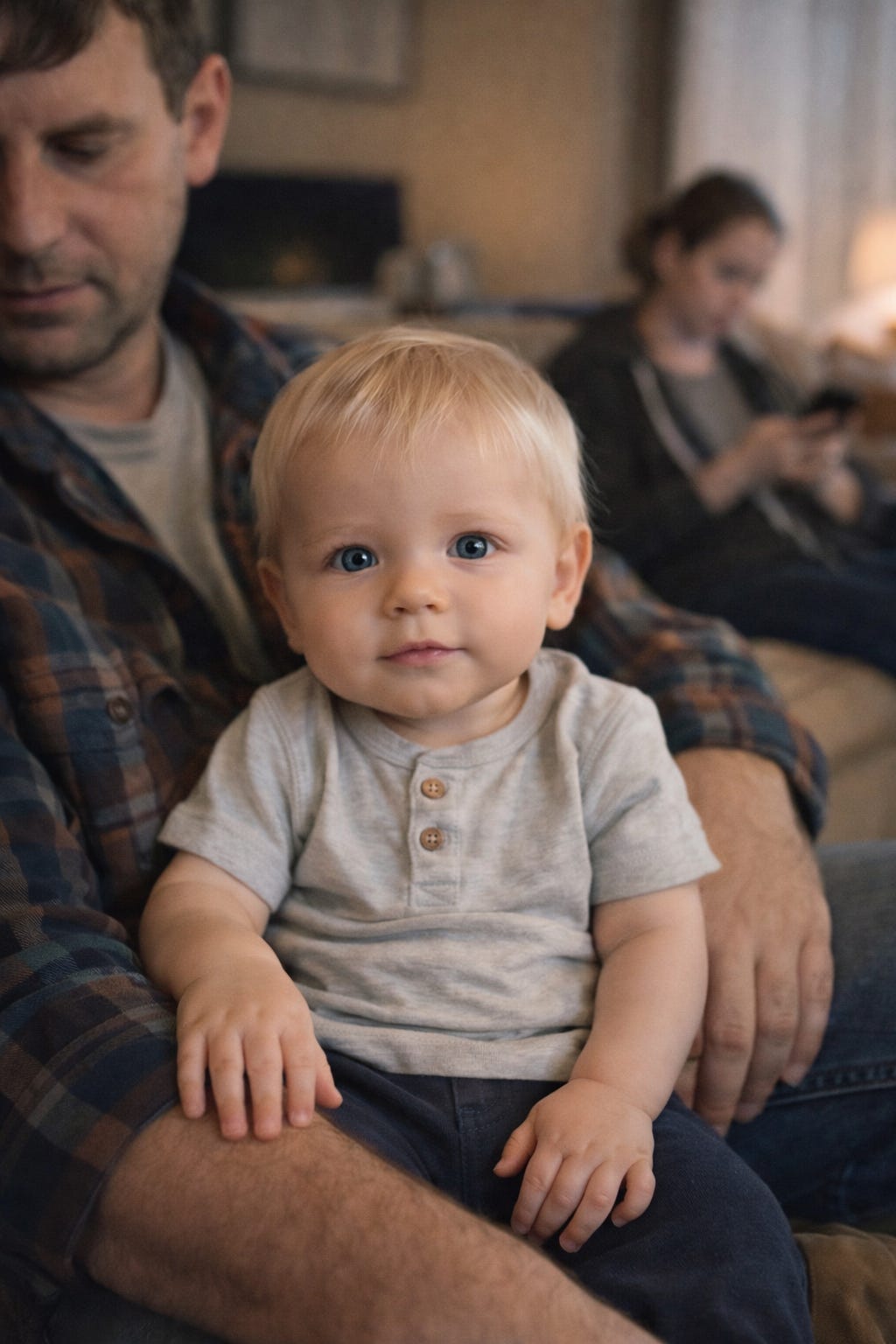
My dad is 32. He worked at a distribution center until a forklift accident crushed three vertebrae in his lower back. Now he’s on disability—$1,100 a month. He takes pills for the pain, watches a lot of TV, and sometimes I catch my mom looking at him with this expression I don’t have words for yet. Worry, maybe. Or grief for the man he used to be.
My mom is 29. She wakes up at 4:30 AM to drive an hour to a Amazon fulfillment center in Johnstown. $13.50 an hour, no benefits, mandatory overtime during peak season. She picks items off shelves, scans them, packs them, sends them to people who’ll never know her name. She comes home smelling like cardboard and exhaustion.
We live in a rental house—$650 a month, which sounds cheap until you remember what my parents make. The heat doesn’t work great. There’s black mold in the bathroom my mom keeps bleaching away. The landlord doesn’t return calls.
The Invisible Qualifying Line
Here’s the thing about my family: we make just enough to be ineligible for help, but not enough to be okay.
Too much for SNAP benefits. Too much for childcare assistance. Too much for healthcare subsidies that would actually help. But not enough for savings. Not enough for emergencies. Not enough for my mom to take a day off when I’m sick, or for my dad to see the specialist three hours away who might—might—have a different approach to his pain.
We exist in this strange gap between the safety net and stability. We’re told to pull ourselves up, but the bootstraps frayed a long time ago.
The Crisis Nobody Talks About Anymore
The opioid epidemic isn’t news here—it’s Tuesday.
My mom’s sister—my Aunt Beth—she’s been in and out of rehab four times. Right now she’s out, living with my grandmother, working part-time at a gas station, trying. My mom helps when she can, which isn’t often.
My dad’s best friend from high school died two years ago. Fentanyl-laced pills. He left behind three kids.
There are more overdose deaths in Somerset County than car accidents. The volunteer fire department carries Narcan. The middle school has a counselor specifically for kids dealing with addiction in their families. This is just... life here. Background noise. Grief we’ve normalized because what else can we do?
The Promise and the Reality
My parents voted for change in 2024. They voted for someone who said he’d bring the jobs back, renegotiate the trade deals that sent manufacturing overseas, cut the regulations strangling small businesses, make America great again—again.
They wanted to believe. God, they wanted to believe.
But it’s 2026 now, and the factory is still empty. The coal mines aren’t reopening—they can’t, not really, not with natural gas so cheap and renewable energy expanding. The tariffs that were supposed to protect American workers mostly just made things more expensive. The tax cuts went to corporations that bought back stock, not to businesses investing in towns like ours.
My dad watches the news and gets angry. My mom has stopped watching altogether.
The gap between what was promised and what’s real—that’s the air I’m breathing from day one.
My Likely Trajectory
Let me tell you what the data says about babies born in ZIP code 15501:
Health:
Higher rates of premature birth and low birth weight due to maternal stress, poor nutrition, limited prenatal care
Limited access to pediatric care (nearest pediatrician is 25 minutes away)
Increased exposure to environmental toxins (old housing stock with lead paint, water quality issues)
Higher likelihood of Adverse Childhood Experiences (ACEs) due to parental stress, financial instability, substance use in extended family
Early Childhood:
Unlikely to attend quality early childhood education (nearest Head Start program has a two-year waiting list; private preschool costs $800/month—impossible)
Language and cognitive development gaps emerging by age 3 due to parental work stress, limited resources for books and enrichment
Increased screen time as primary childcare solution when mom is working
Education:
Underfunded public schools (Somerset Area School District consistently below state averages in funding and performance)
Teacher turnover is high; extracurricular programs are limited
By fourth grade, statistically likely to be behind in reading and math compared to national averages
College attendance rate for Somerset County: approximately 40%, compared to 70% in wealthier Pennsylvania counties
Of those who attend college, many take on significant debt and don’t complete degrees
Economic Outcomes:
Without college degree: median lifetime earnings around $1.3 million (compared to $2.3 million for college graduates)
Likely to remain in or near Somerset County due to family ties, limited mobility resources
Probable employment in service sector, logistics, healthcare support roles—jobs that exist but don’t build wealth
Homeownership: possible but challenging; asset accumulation: unlikely
Retirement security: minimal
Health Trajectory:
Life expectancy in Somerset County: 76.2 years (national average: 78.9 years)
Higher rates of diabetes, heart disease, obesity by middle age
Likely to experience chronic pain, limited access to quality healthcare
Mental health challenges (depression, anxiety) statistically probable, with limited treatment access
Social Outcomes:
Strong community ties but limited economic opportunity
Possible military enlistment as pathway to education/training (common in communities like mine)
Marriage and family formation likely in early twenties, often under financial stress
Civic engagement moderate but declining (volunteering, church participation—still present but fading)
But I’m Not Just a Statistic
Here’s what the data doesn’t capture:
My mom sings to me—old country songs, lullabies her grandmother taught her. Her voice is tired but tender.
My dad, even with his pain, holds me carefully, like I’m the most precious thing in the world. Because I am.
My grandmother makes me blankets. My neighbor brings over hand-me-down baby clothes and doesn’t make it weird.
There’s kindness here. Resilience. People who show up for each other because that’s what you do.
I have a chance. It’s not the same chance as a baby born in Bethesda, Maryland, or Palo Alto, California—let’s be honest about that—but it’s not zero.
If my parents can keep me healthy through these first 1,000 days... If the school system holds together long enough to give me decent teachers... If I avoid the traps that caught my aunt and my dad’s friend... If someone sees potential in me and points me toward a scholarship, a trade program, a path...
Maybe I become the exception. Maybe I break the pattern.
But policy matters. Resources matter. Investment matters.
Right now, communities like Somerset are holding on by our fingernails, told to be resilient while the support systems crumble. My trajectory doesn’t have to be predetermined—but changing it requires more than hope and hard work.
It requires a country that believes babies like me deserve the same shot at flourishing as babies born anywhere else.
[The wind picks up. A train whistle sounds in the distance—one of the few that still runs through, carrying goods but not jobs, not futures, not hope. Not yet, anyway.]
My name is Liam.
I was born in Somerset, Pennsylvania.
And my story is just beginning.