America Is a Tinderbox
The Passions That Could Ignite Civil War—and How We Can Prevent It

Ray Dalio doesn’t mince words anymore. The founder of the world’s largest hedge fund recently declared that the United States is now a “tinderbox,” warning of “irreconcilable differences” that could push us toward what he calls “a civil war of some sort.” On the All-In Podcast, David Friedberg offered his own blunt assessment: when everyone you talk to is “activated emotionally,” when people across the spectrum feel they are being “left behind” while “the world is racing ahead,” the danger is real. Dalio puts the probability of serious civil conflict at 35-40 percent.
These aren’t the warnings of fringe alarmists. These are sober voices from inside the financial establishment—people whose profession requires calibrated assessments of risk. When they say America is one step away from Stage 6 in the historical cycle of societal breakdown, we should pay attention.
But as a psychiatrist who has spent years thinking about how emotions shape behavior, I want to offer something these economic analyses often miss: the central role of passion, and how understanding it might be our most important tool for prevention.
Passion Is the Ignition
Dalio’s framework emphasizes structural forces—debt, inequality, the erosion of bipartisanship. These matter enormously. The wealthiest 1% now hold 31% of America’s net worth, up from 23% in 1989. The bottom 50% watched their share shrink to just 2.5%. When people feel the system is fundamentally unfair, conflict follows. History shows this pattern repeatedly: the French Revolution, the Russian Revolution, and others.
But the structure alone doesn’t ignite. What ignites is passion.
Friedberg put his finger on something essential: “Everyone I speak to is activated emotionally.” This activation isn’t a side effect—it’s the mechanism. Polarization isn’t merely about political disagreement; it’s about the emotional quality of that disagreement. When political difference becomes existential threat, when the other side stops being fellow citizens with different views and becomes enemies, the guardrails start to fail.
In my clinical work, I’ve seen how emotions drive behavior far more powerfully than logic or even self-interest. Fear contracts our thinking. Anger demands action. Contempt dehumanizes. These are ancient neural systems, designed for survival in a world of immediate physical threats. They served us well on the savanna. They serve us poorly when the “threat” is a neighbor with a different political bumper sticker.
The tech platforms that mediate so much of our discourse have become passion amplifiers. They’re optimized for engagement, and nothing engages like outrage. Every day, millions of Americans have their fears stoked, their anger validated, their contempt reinforced—not because any human decided this was good for democracy, but because the algorithm found it was good for clicks.
2026: Renewal or Reckoning
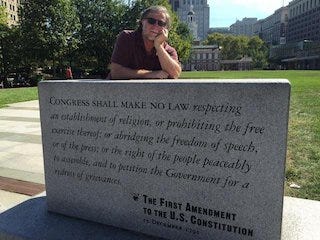
America will mark its 250th birthday in 2026. This timing feels almost providential—a moment when we could either descend further into conflict or choose renewal.
I’ve devoted the last chapter of my professional life to this question. After decades as a psychiatrist, I pivoted to what I call civic entrepreneurship—founding Moonshot Press and directing Project 2026, a democratic renewal initiative timed to this anniversary. Some colleagues think this an odd career move. I see it as a natural extension of the same work: understanding what makes human beings flourish, and creating conditions that support it.
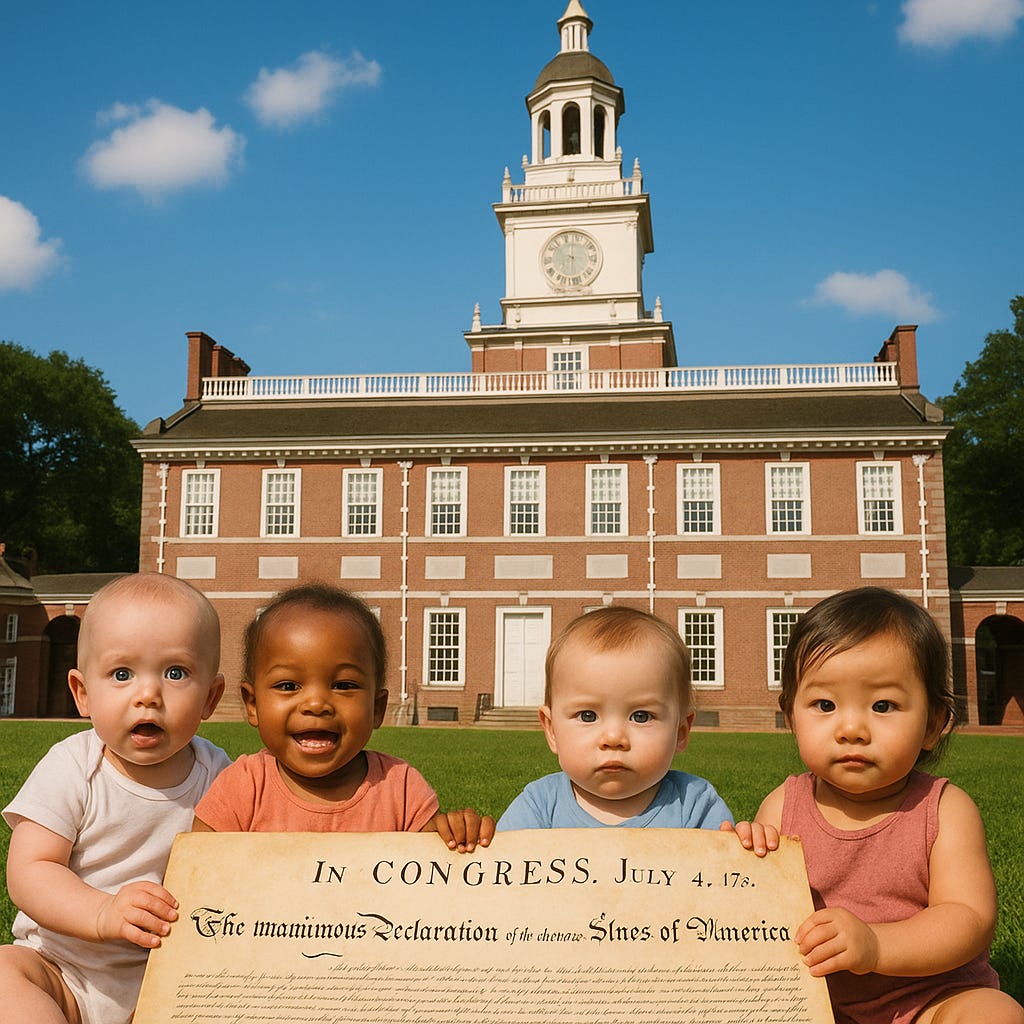
The founders who gathered in Philadelphia 250 years ago understood something we’ve partly forgotten: that self-government requires emotional discipline. They knew history. They knew that democracies tend to destroy themselves through faction, passion, and the corrosion of common purpose. They built institutions designed to slow passion down, to force deliberation, to require coalition.
But institutions alone can’t save us if the people who inhabit them have lost the civic temperament those institutions require.
Neither Denial Nor Despair
It would be easy—and perhaps understandable—to respond to these warnings with either denial or despair. Neither helps.
The denial response says: “Civil war? In America? That’s hyperbolic.” But Dalio isn’t predicting armies clashing on battlefields. He’s describing a society where different factions become willing to inflict maximum pain on each other, where the peaceful transfer of power becomes contested, where political violence becomes normalized. We’ve already seen early signs of this trajectory.
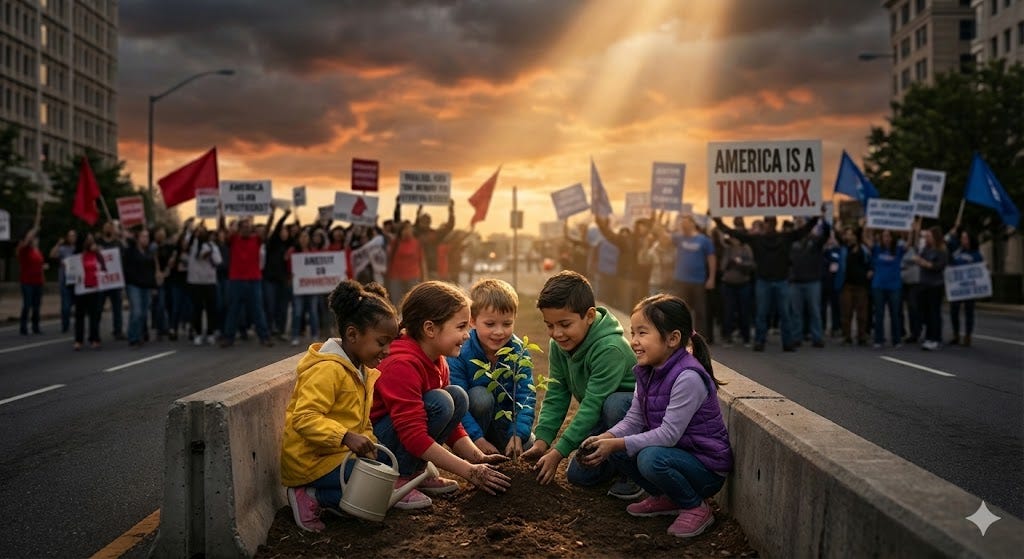
The despair response says: “What can any individual do against such vast forces?” But here’s where my clinical background offers some hope. Individual actions matter precisely because passions spread through social contagion. One person’s calm can reduce another’s anxiety. One act of bridge-building creates permission for others. Movements begin with what John Paul Lederach calls “pockets”—small communities where people model different ways of engaging.
This is why I do this work. Not because I’m certain it will succeed, but because the alternative—waiting passively while the forces of fragmentation gain strength—is unacceptable.
Building Arks in a Time of Storm
Project 2026 operates on a simple premise: democracy requires democrats. Not partisans of the Democratic Party, but citizens who have internalized the habits, skills, and dispositions that self-government requires. We need what I call salutogenic democracy—a framework that emphasizes creating civic health, not just preventing civic disease.
This means treating citizens as thinking adults rather than audiences to be mobilized. It means journalism that equips people for participation rather than merely reports on conflict. It means bridging divides not through empty calls for “civility” but through the hard work of finding shared interests that make cooperation rational.
We’re focusing on early childhood development—what we call the “First 1000 Days”—because democratic capacity begins in the formative period when children develop the neurological foundations for emotional regulation, empathy, and trust. We’re focusing on rural-urban divides because these geographic fault lines track dangerously close to our political ones. We’re starting to work in Montgomery County, Pennsylvania, and places like it, because real change happens locally before it happens nationally.
None of this guarantees success. Dalio may be right that we’re past the point of return. But his framework also identifies an alternative path: “rise above it and realize that our common good is going to necessitate us dealing with it so that what works for most people is going to work.”
For the Children Born Today
I have no illusions about the difficulty of what we face. The structural forces Dalio describes—the debt, the inequality, the technological disruption—don’t disappear because people decide to be nicer to each other. The passions that threaten us have deep roots in genuine grievances.
But I’ve also seen, in clinical practice and in civic life, how human beings can transform. We are not prisoners of our passions. We have the capacity to recognize when our emotions are being manipulated, to pause before reacting, to seek understanding before condemning. These capacities can be cultivated. They can be taught. They can spread.
The 250th anniversary of America’s founding is not magic. But it is an opportunity—a natural moment for reflection on who we’ve been and who we might become. Whether we seize it or squander it depends on choices that millions of us will make, individually and together, in the months and years ahead.
I’ve chosen to spend whatever professional years I have left on this work. Not because I’m optimistic—the evidence makes optimism difficult—but because I believe the stakes demand engagement regardless of odds. The children born today, on this day when we debate whether civil war awaits them, deserve adults who tried.
They also deserve adults who acted together.
If what you’ve read here resonates—if you believe that preventing civil conflict is work worth doing, and that 2026 represents a genuine opportunity for renewal—I invite you to learn more about Project 2026 and join us. We need physicians, teachers, journalists, parents, business leaders, and citizens of every political persuasion who are willing to build bridges rather than burn them. This isn’t work any of us can do alone. But together, we might just prove Dalio’s grimmer predictions wrong.
Learn about our plans with Project 2026 and how to get involved